Keeping hydraulic and lubrication fluids clean is critical to equipment reliability.
Most systems already contain some form of in-line filtration, but that does not always mean that the fluid inside the reservoir is being cleaned as effectively as it could be (almost always, it is not!). Contamination may remain suspended in the oil, settle in the reservoir, or continue entering the system during normal operations.
Offline filtration provides another way to control that contamination.
Also known as kidney-loop filtration, an offline filtration system operates independently from the machine’s main hydraulic or lubrication circuit. Fluid is pulled from the reservoir, passed through a dedicated filtration system, and returned to the reservoir after contaminants have been removed.
This separate circuit can operate while the machine is running or while it is shut down.
How Does Offline Filtration Work?
A typical offline filtration system contains its own pump, motor, and filter housing.
The pump draws fluid directly from the reservoir and moves it through the filter element. Cleaned fluid is then returned to the reservoir in a continuous loop.
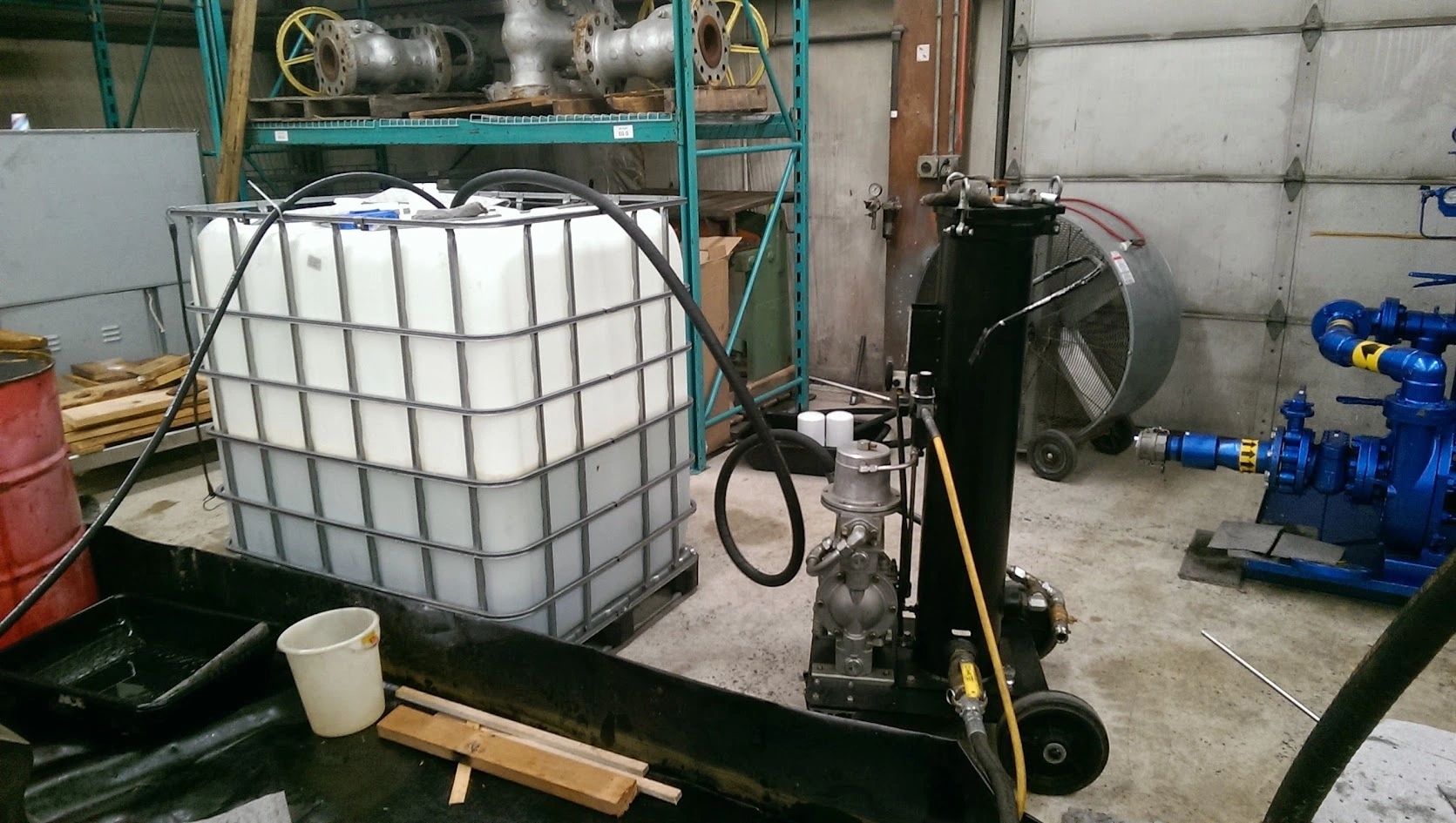
Offline filtration can be thought of as an independent subsystem that continuously circulates fluid outside the primary hydraulic circuit. This allows the filter to maintain overall reservoir cleanliness without relying on the machine’s existing hydraulic flow.
Because the filtration system is independent, the flow rate through the filter can remain relatively consistent.
That is useful when fine filtration is required.
The system can also continue circulating fluid when the primary equipment is idle, giving maintenance teams more flexibility in terms of when filtration takes place.
Why Use Offline Filtration?
One of the main reasons to use offline filtration is to supplement the filtration already installed on the equipment.
Pressure filters are typically used to protect sensitive downstream components. Return-line filters capture contamination before fluid reaches the reservoir. These filters perform important functions, but contamination can still accumulate inside the reservoir over time.
An independent filtration loop can continually polish the reservoir fluid without changing the machine’s primary hydraulic circuit. Above all, offline systems can provide high-efficiency filtration without interfering with equipment operations.
Benefits of Offline Filtration
Improved Fluid Cleanliness
Offline filtration provides an additional opportunity to remove fine particulate contamination from the oil.
Because the filtration circuit operates separately from the primary system, the filter can be selected specifically around the cleanliness target of the application.
Filtration While Equipment is Offline
Offline filtration equipment does not require the main hydraulic pump to operate.
A kindey-loop system can continue circulating oil during maintenance periods or when production equipment is shut down.
This allows fluid conditioning to continue without operating the entire machine.
Supplemental Filtration for Existing Equipment
Older equipment may not have been designed with sufficient filtration for current cleanliness requirements.
In these situations, installing or temporarily connecting an offline system can provide additional filtration without requiring major changes to the original hydraulic circuit. Because of this, retrofit capability is a strong advantage of offline filtration.
Filtered Fluid Transfer
Mobile offline filtration equipment can also be used when transferring oil.
New hydraulic oil often fails to meet cleanliness requirements of sensitive hydraulic systems. Because of this unfortunate reality, a mobile filtration unit allows new oil to be filtered during transfer rather than sending it directly from a drum or tote into the reservoir.
Where Is Offline Filtration Used?
Offline filtration is commonly used on industrial hydraulic systems where controlling reservoir cleanliness is important.
It can also be applied to lubrication systems.
Gearboxes, circulating lubrication systems, and other equipment with dedicated oil reservoirs can benefit from an independent filtration loop.
Common applications include:
- machine tools
- gearboxes
- mobile equipment
- hydraulic systems
The approach is particularly useful when a system contains a large oil volume or when the installed filtration does not provide enough circulation through high-efficiency media.
Stationary vs. Mobile Offline Filtration
Offline filtration equipment does not have to be permanently installed.
A stationary kidney-loop system may make sense when one critical reservoir needs continuous filtration. A mobile filtration system, however, provides more flexibility when multiple pieces of equipment need to be serviced.
A mobile unit can be moved throughout a facility and connected where filtration is required. The same equipment may be used for reservoir cleanup, filtered fluid transfer, or supplemental filtration during maintenance.
Filter carts are a common form of mobile filtration equipment suitable for filtration, flushing, and fluid-transfer applications on industrial and mobile equipment.
This flexilibility makes portable systems useful for maintenance departments responsible for several hydraulic or lubrication systems.
Designing Mobile Filtration Equipment Around the Application
The basic principle behind offline filtration is simple; designing the equipment that performs it, on the other hand, requires more consideration.
Such considerations include:
- Flow rate needs to be appropriate for the reservoir volume
- The pump must be capable of handling the viscosity of the fluid being filtered
- Filter housings and elements need to match the required cleanliness level while providing enough dirt-holding capacity for the application
- Hose size can influence pressure drop through the system
- Seal materials must also be compatible with the fluid
- Instrumentation may be added when operators need to monitor filter condition or system pressure
For this reason, one standard filtration cart is not always the best solution for every facility. The filtration equipment should be developed around the system it will actually be servicing.
Custom Mobile Filtration Equipment from Performance Filtration Products
Performance Filtration Products designs and manufactures custom mobile filtration equipment for hydraulic and lubrication applications.
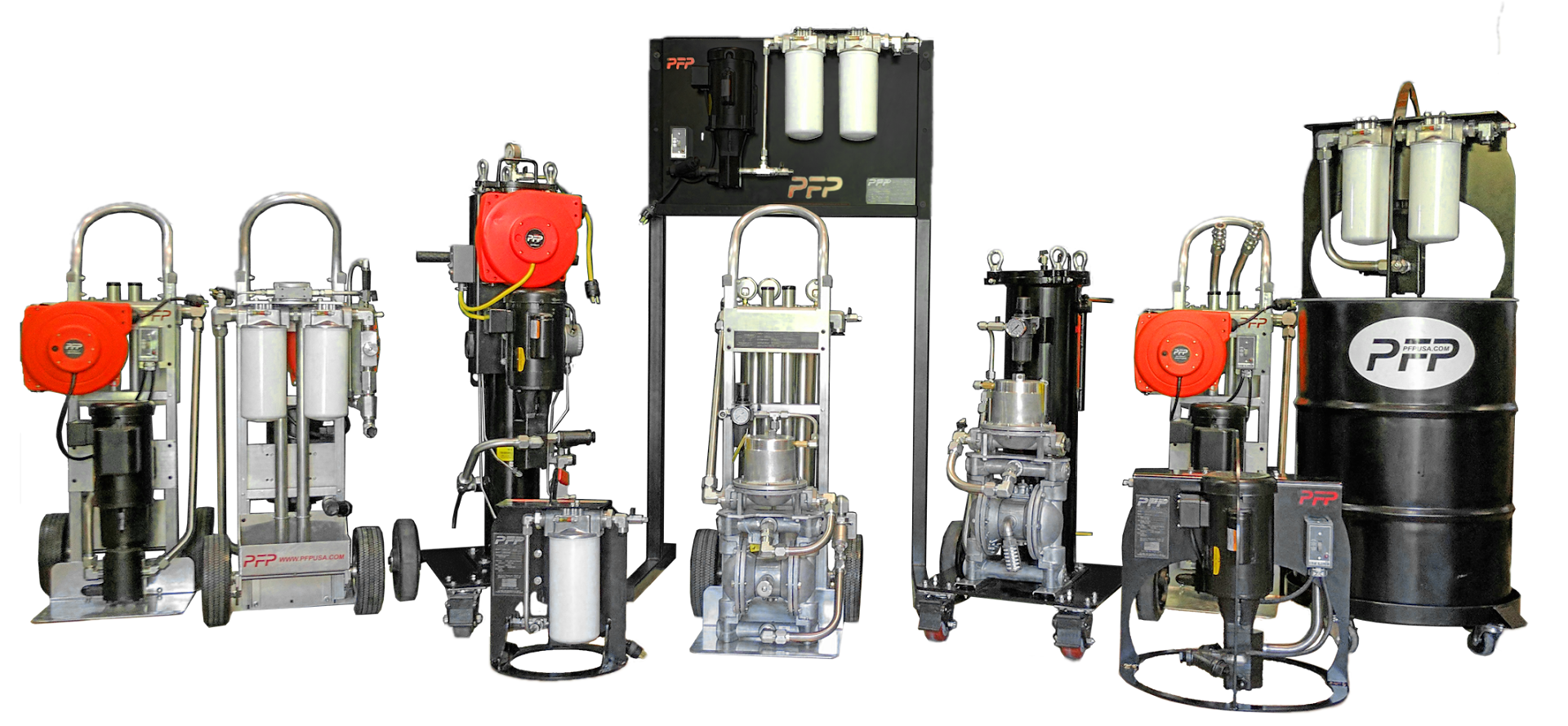
Systems can be developed around the required flow rate, fluid type, and filtration objective of the customer. Some applications may require a compact unit for routine kidney-loop filtration.
Others may need higher flow rates for large reservoirs or fluid-transfer operations. Filter arrangements can also be configured around the cleanliness level the equipment is intended to achieve.
Performance Filtration Products conducts all manufacturing in-house, allowing the design to be tailored around the application rather than limited to a fixed catalog configuration.
Looking for a custom filter cart or mobile filtration system?
We can design mobile filtration systems or filter carts for a wide variety of applications. Our experts are happy to discuss your unique project requirements.


0 Comments