Hydraulic oil establishes the lubricating film between moving surfaces, carries heat away from components, and provides corrosion protection throughout systems. When that fluid becomes contaminated, the consequences extend well beyond simply having dirty oil.
Contamination can alter the way pumps, valves, cylinders, and actuators operate. Microscopic particles can enter component clearances, water can accelerate corrosion and fluid degradation, and entrained air can change the effective compressibility of the fluid.
The scale of the problem is substantial.
According to Eaton, it is estimated that more than 80% of hydraulic failures can be attributed to contaminated fluids, including failures that involve pumps, valves, hoses, and fittings.
Perhaps more importantly, hydraulic contamination is often self-reinforcing. Even a small amount of contamination can contribute to wear. That wear creates additional particles. Increased internal leakage can generate additional heat, which accelerates oil degradation and creates further contamination.
Contamination control therefore should not be treated simply as a maintenance problem. Ensuring clean hydraulic oil is a system-level reliability strategy for long term operations.
What is Hydraulic Oil Contamination?
Hydraulic contamination is any foreign material or unwanted condition within the fluid that can interfere with lubrication, power transmission, component life, or fluid stability.
The principal forms of hydraulic-fluid contamination are:
- Solid particulate
- Water
- Air
According to Parker, “small” particles are considered to be below approximately 5 µm(c) while “large” particles are considered to be above approximately 5 µm(c).
There is also an important secondary category: contamination created by degradation of the oil itself.
Oxidation products, sludge, corrosion debris, and degraded additives can all eventually become contaminants circulating within the hydraulic system.
This distinction matters because the correct removal technology depends on what is actually wrong with the oil. A high efficiency particulate filter may dramatically improve an ISO particle count while doing very little to correct severely degraded oil chemistry.
What Causes Hydraulic Oil Contamination?
1. Contamination Introduced With New Hydraulic Oil
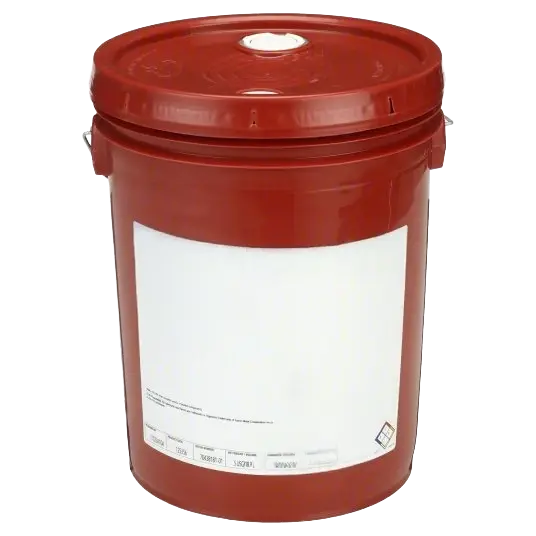
One of the easiest mistakes to make is assuming that new oil is clean oil.
Hydraulic oil passes through manufacturing equipment, bulk storage tanks, transportation containers, transfer hoses, and dispensing equipment before reaching the final machine reservoir. Each step creates another opportunity for particulate contamination.
2. Built-In Contamination From Manufacturing, Assembly, & Repair
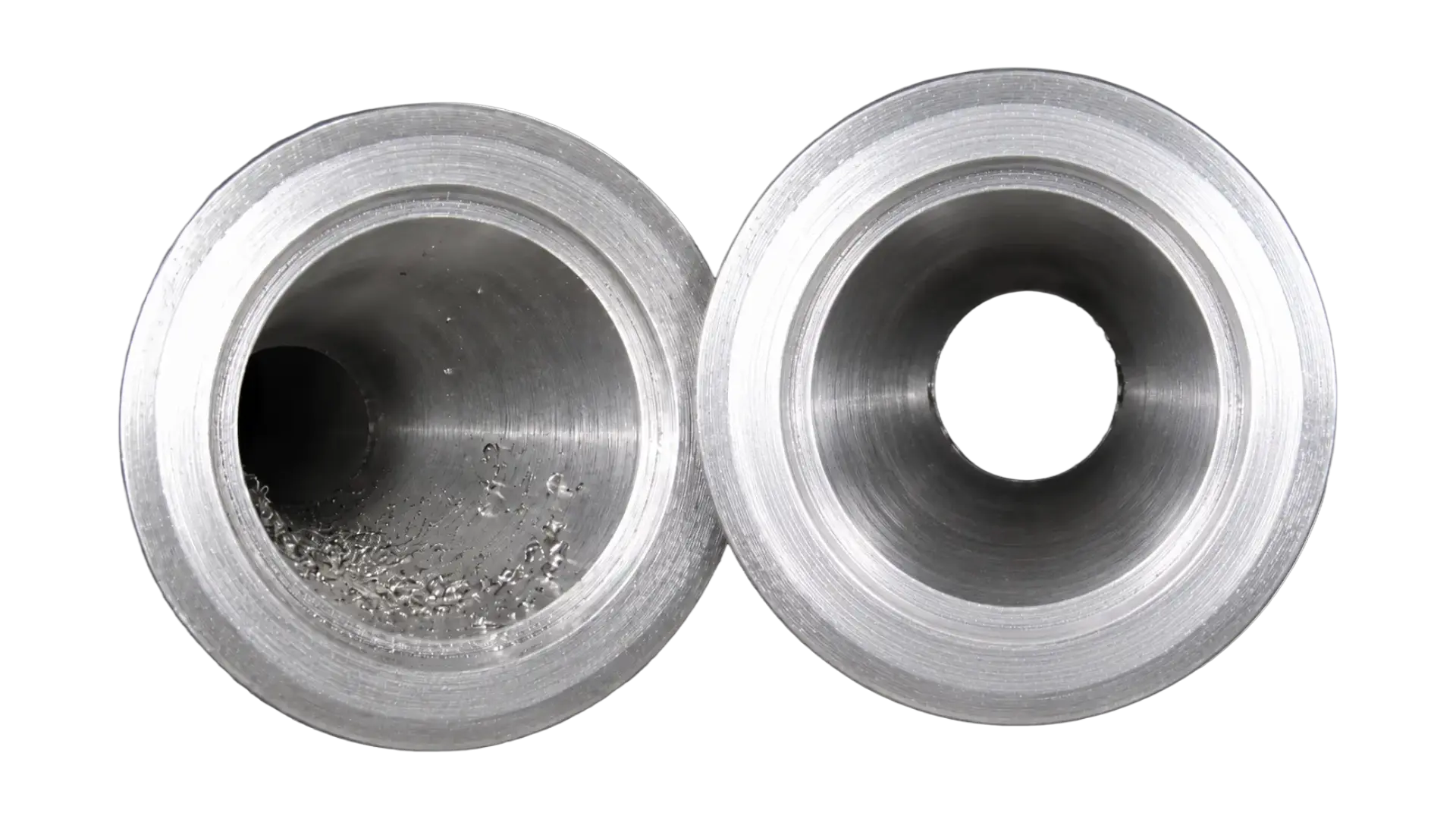
A newly constructed hydraulic system is not necessarily a clean hydraulic system.
Fabrication and assembly can leave behind:
- Metal particles
- Hose debris
- Fibers
- Dust
- Seal Fragments
- Welding / machining residue
Fabrication debris along with contamination introduced during transportation are reasons why newly commissioned equipment should be cleaned via high-velocity oil flushing before normal operation. Turbulent flow is needed to mobilize and remove built-in contamination before normal operations.
Maintenance therefore creates an interesting paradox: the act of repairing a hydraulic system can itself contaminate it if cleanliness is not controlled during the repair.
3. Water Entering Hydraulic Oil
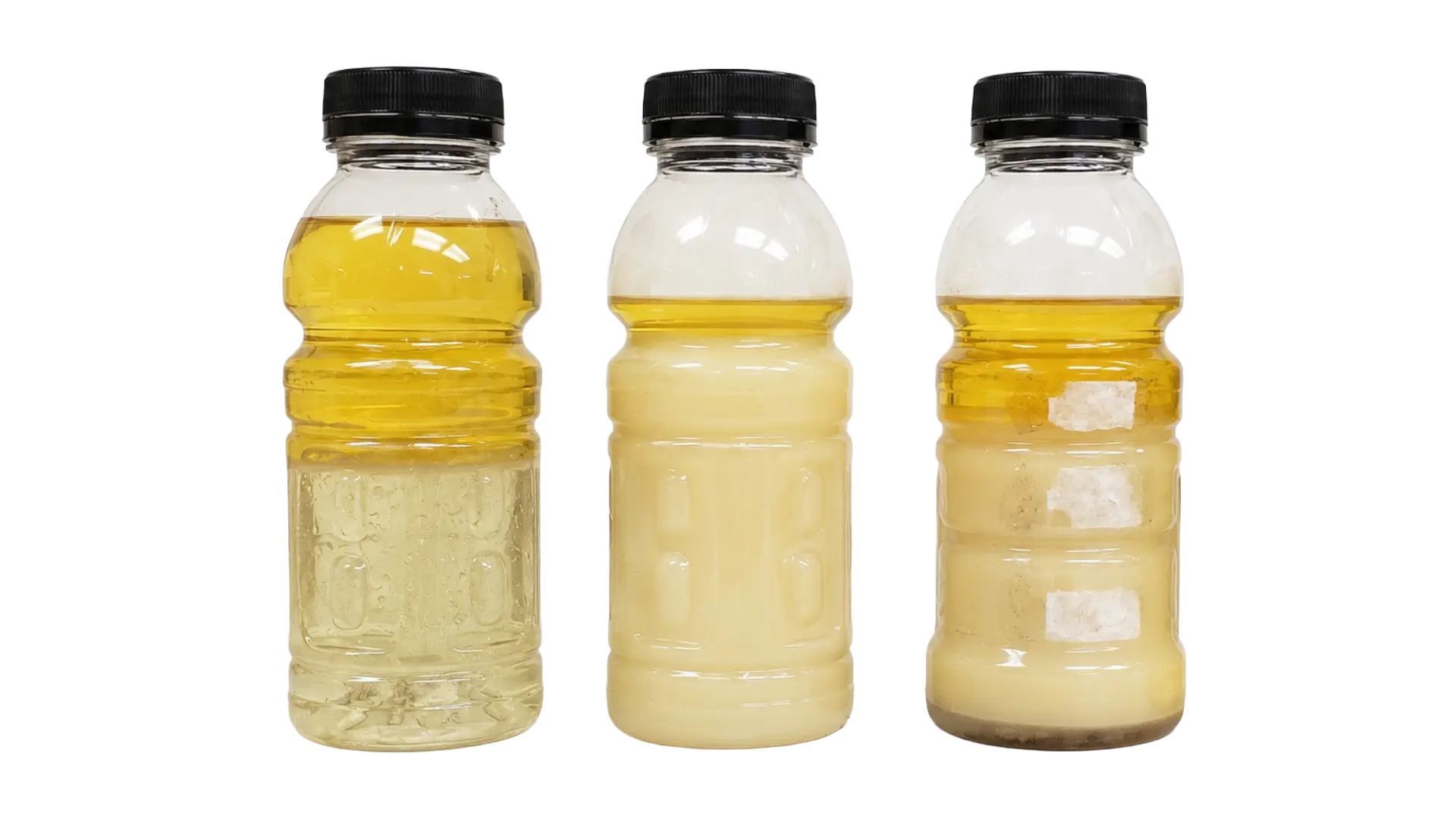
Water contamination can enter through condensation, leaking heat exchangers, damaged seals, washdown procedures, or humid air entering the reservoir.
It is well documented that cleaning and maintenance operations often create potential for water ingress.
An important distinction is the difference between water content and water saturation.
Water content is commonly reported in parts per million (ppm), while saturation expresses how close the oil is to the amount of dissolved water it can hold at its current conditions. Once that saturation limit is exceeded, water can begin appearing as free or emulsified water.
Hydraulic oil can dissolve a limited quantity of water, but once the saturation point is exceeded, undissolved water can appear as free or emulsified water. The amount of water a fluid can hold in solution varies with fluid chemistry and temperature, which is why a ppm measurement should not always be interpreted in isolation.
Vacuum dehydrators are commonly used to remove water from hydraulic and lubrication oils. Our sister company, Precision Filtration Products, provides vacuum dehydrators for sale and rent.
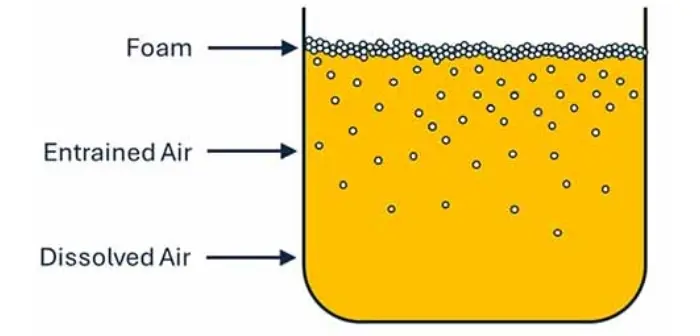
4. Air Entrainment
Air is a frequently overlooked form of hydraulic contamination.
Air often enters through:
- Suction-side leaks
- Pump aeration
- Poor reservoir design
- Turbulent return flow
It’s important to distinguish air dissolved within the fluid from entrained air. Entrained air is particularly problematic because bubbles are repeatedly compressed and decompressed as they travel through different pressure zones.
Parker notes that air can be up to approximately 20,000 times more compressible than the liquid containing it. Hydraulic power transmission depends on the fluid remaining relatively incompressible, so excessive air can reduce effective system response and increase the amount of energy spent compressing fluid rather than performing useful work.
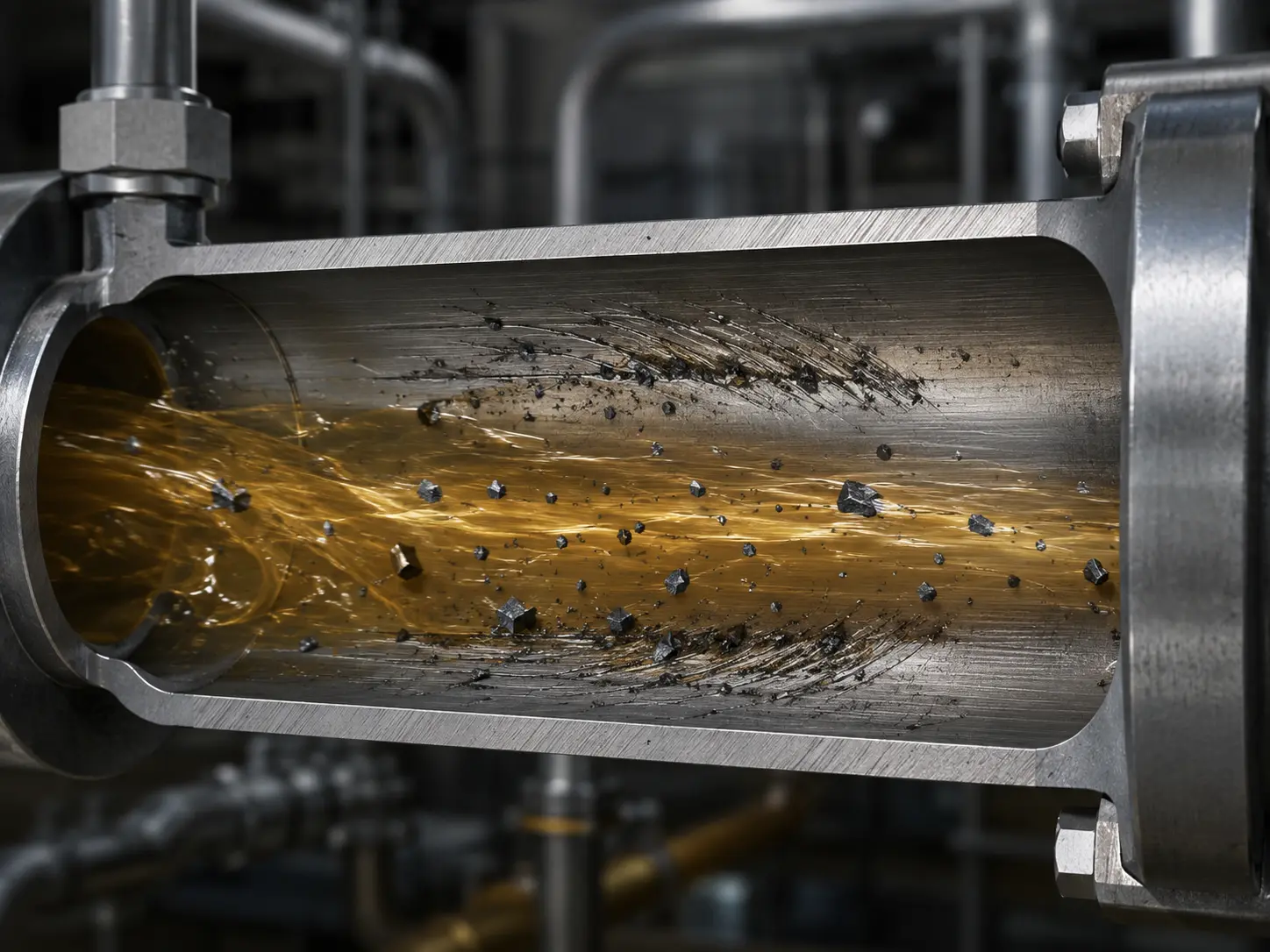
5. Internally Generated Wear Particles
Contamination does not only travel into a hydraulic system.
Due to mechanical deterioration, a machine actually manufactures its own contamination.
This degradation is often the result of long-term operation that involves abrasion, sliding, rubbing, or other forms of mechanical fatigue. Naturally, pumps, valves, cylinders, bearings, and other moving components continually experience some degree of material wear.
This demonstrates one of the most important concepts in contamination control:
Particles create wear → wear generates particles → new particles create wear
Once this cycle begins, contamination generation can accelerate even if the original source of external contamination has already been corrected.
This is why filtration should not merely be reserved for preventing dirt from entering, but should be used to continuously remove contamination being generated inside the machine itself. It’s for this reason that we recommend mobile filtration systems designed specifically for your application or system requirements.
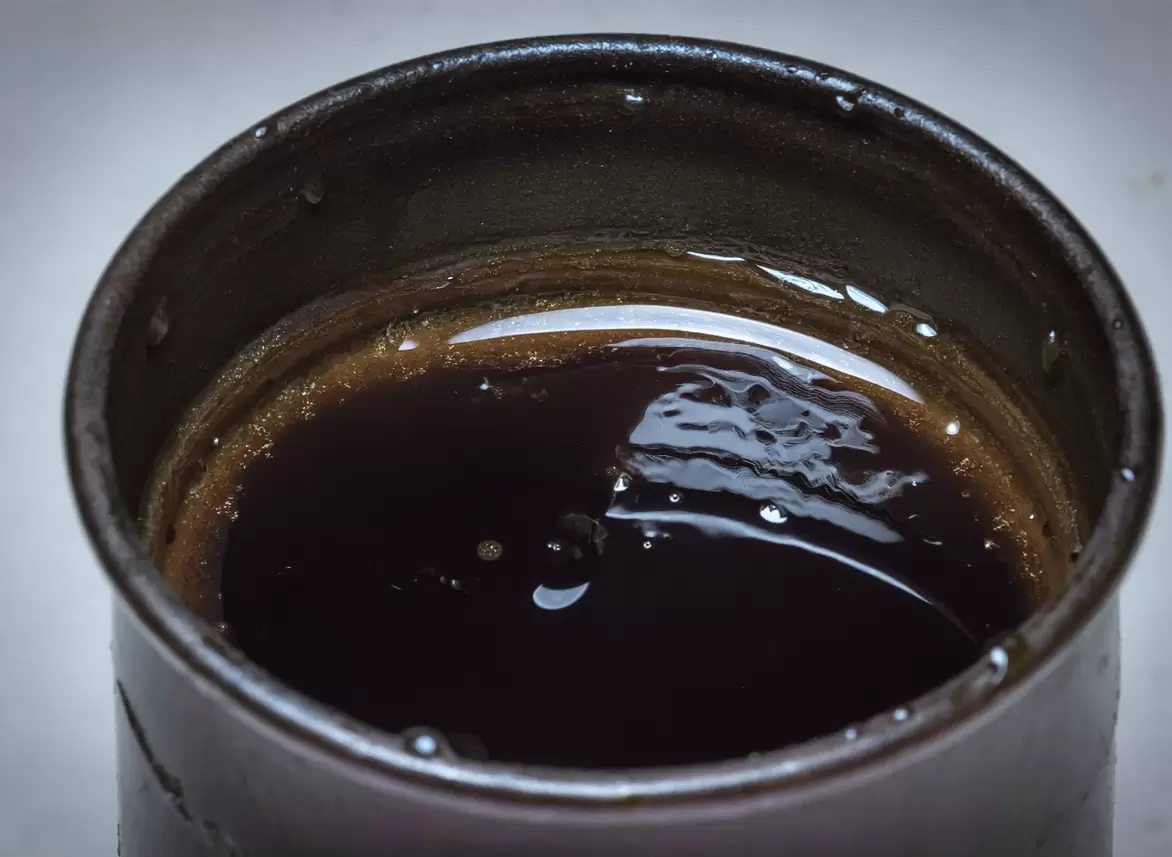
6. Heat, Oxidation, and Oil Degradation
As hydraulic oil degrades over time, the oil itself presents new contamination challenges.
High operating temperatures are known to accelerate oxidation and can degrade portions of the additive package. In addition, air in a hydraulic system invites oxidation which can contribute significantly to the production of oxides, particulates, and sludge within the fluid.
At this stage, simply installing a finer filter may address some of the resulting solids without correcting the underlying thermal or chemical problem.
Effects of Hydraulic Oil Contamination
Hydraulic oil contamination rarely causes just one isolated problem. Particles, water, air, and degraded fluid can affect different parts of the system simultaneously, while one form of damage can create conditions that accelerate another.
Solid particulate contamination is particularly destructive because the most damaging particles are not necessarily the largest ones. Particles approaching the size of the dynamic clearances inside pumps, valves, and other precision components can enter the spaces between moving surfaces and become trapped.
Hard particles moving through these clearances can score surfaces, interfere with valve movement, and progressively increase internal leakage. Bosch Rexroth associates particle contamination with component wear, spool sticking, internal leakage, and declining hydraulic efficiency.
This is one reason visual inspection is such a poor measure of hydraulic oil cleanliness. Oil can appear completely clear while containing millions or even billions of microscopic particles.
ISO 4406 provides a much more useful method of quantifying this contamination. The standard expresses particle concentration at three size thresholds:
- ≥4 µm(c)
- ≥6 µm(c)
- ≥14 µm(c)
What makes these numbers particularly important is that ISO cleanliness codes are logarithmic rather than linear. Each increase of one ISO code represents approximately twice the particle concentration.
For example, Parker’s ISO contamination table indicates that an ISO cleanliness level of 19/16/13 corresponds approximately to:
| Particle Size | ISO Code | Particles per mL |
|---|---|---|
| ≥4 µm(c) | 19 | 2,500–5,000 |
| ≥6 µm(c) | 16 | 320–640 |
| ≥14 µm(c) | 13 | 40–80 |
A 100-gallon hydraulic reservoir contains approximately 378,500 milliliters of oil. At ISO Code 19, that reservoir could therefore contain roughly 946 million to 1.89 billion particles ≥4 µm(c).
This gives some perspective to what may initially look like a minor cleanliness improvement. Moving from ISO Code 19 to ISO Code 16 at a particular particle threshold represents approximately eight times fewer particles.
The acceptable cleanliness level also depends on the equipment being protected. Bosch Rexroth provides an example in which an axial-piston pump has a recommended cleanliness level of approximately 19/17/17 at pressures up to 140 bar, while pressures above 200 bar require approximately 16/14/11.
This illustrates an important principle: the most contamination-sensitive component in the system should help determine the cleanliness target for the oil.
As wear progresses, the contamination problem can begin reinforcing itself. Hard particles damage component surfaces and generate additional wear debris. Increased clearances then create additional internal leakage, which can increase heat generation and further accelerate fluid degradation.
The contamination cycle can therefore look like:
Particle contamination → Component wear → Additional wear debris → Increased internal leakage → Higher heat generation → Accelerated oil degradation → Additional contamination
Hydraulic Oil Contamination Removal Methods
The correct removal method depends on what type of contamination is present and whether the hydraulic oil itself remains suitable for continued service.
Solid particulate contamination is typically addressed with high-efficiency filtration. The filtration system should be selected around the required ISO cleanliness target rather than simply choosing the smallest micron rating available. Filter efficiency, contaminant-loading capacity, fluid viscosity, and required flow all influence how effectively particulate can be removed.
For heavily contaminated oil, staged filtration can be useful:
Coarse filtration → Fine filtration
The first element typically captures larger contamination before the oil reaches the finer downstream element. This reduces the loading placed on the final filtration stage and may improve usable element life.
Water contamination requires a different approach because water can exist in oil as dissolved, emulsified, and free water.
Small quantities of free water may be removed using water-absorbing filter media. More severe moisture contamination can require technologies such as vacuum dehydrators. Precision Filtration Products, for example, offers vacuum dehydration systems designed to remove free water while also reducing dissolved water content.
Air contamination usually requires correcting the source rather than simply filtering the oil. Suction-side leaks, pump inlet restrictions, turbulent reservoir return conditions, and inadequate reservoir deaeration can all contribute to persistent aeration. Parker identifies proper reservoir design and improved air separation among the methods used to reduce air contamination.
Why Filter Carts Are Effective Solutions for Hydraulic Oil Contamination
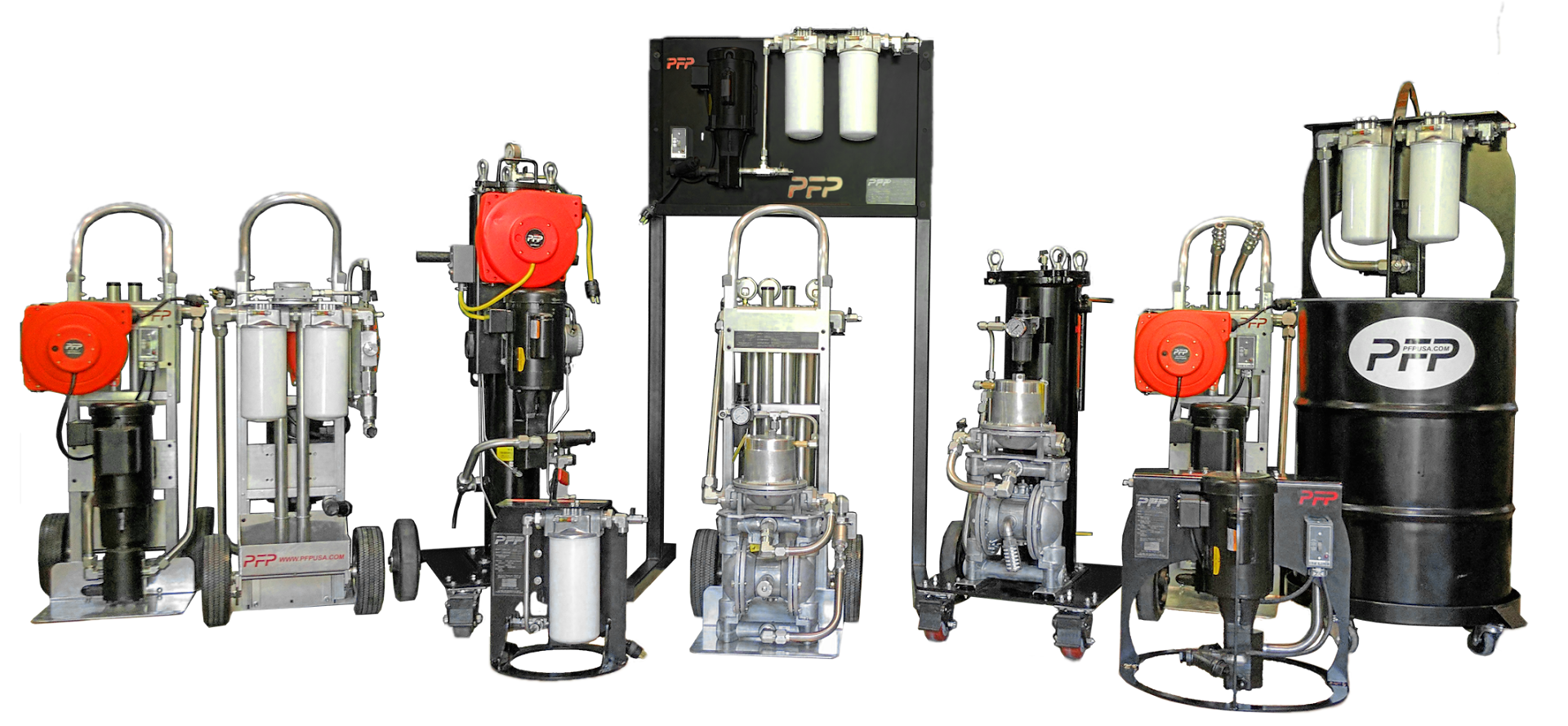
A filter cart creates an independent filtration circuit that operates separately from the machine’s primary hydraulic system:
Reservoir → Pump → Filter → Reservoir
Instead of waiting for contaminated oil to eventually move through the machine’s existing return-line filtration, a filter cart continuously draws fluid directly from the reservoir, processes it through dedicated filtration, and returns it to the system.
That makes filter carts particularly useful for:
- Cleaning contaminated hydraulic reservoirs
- Kidney-loop filtration
- Filtering new oil before filling equipment
- Post-maintenance cleanup
- Fluid transfer
- Commissioning filtration
- Maintaining target ISO cleanliness levels
The key advantage is the difference between in-line filtration and offline filtration.
In-line filters are installed directly within the operating hydraulic circuit. They protect system components as oil moves through pressure, return, or other working lines, but their performance is tied to the machine’s normal operating conditions. Flow through the filter depends on system operation, and the filter must be designed around the pressures and flow rates present within that circuit.
A filter cart operates differently. Because it contains its own pump and filtration equipment, it creates a separate offline filtration loop that can continuously condition reservoir oil without depending on the machine’s primary hydraulic pump. This allows filtration to be performed when the equipment is operating, during scheduled downtime, or as a dedicated cleanup process after contamination has been identified.
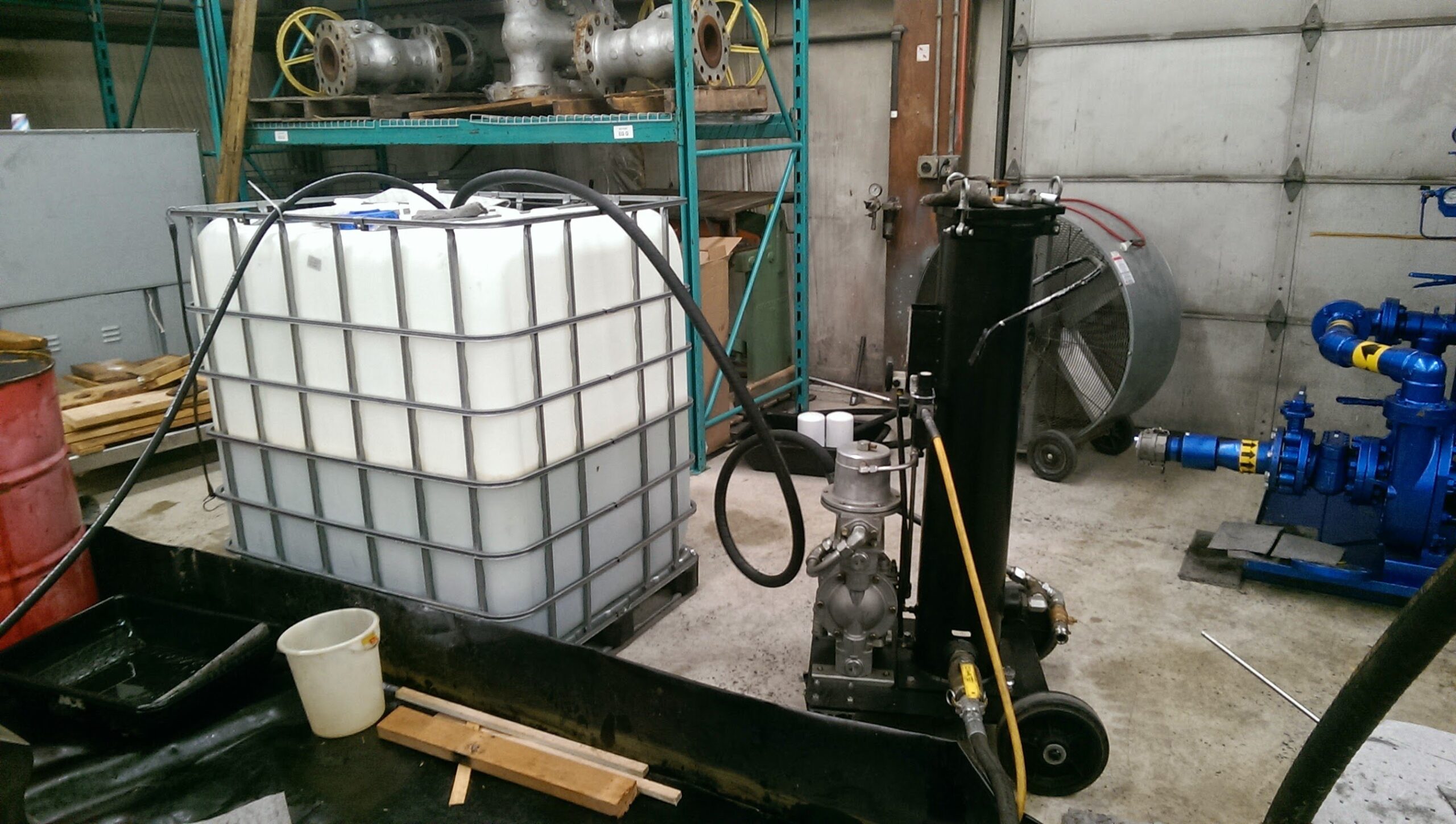
Offline filtration is especially useful when contamination is distributed throughout a reservoir. Rather than waiting for contaminated oil to eventually pass through the machine’s installed filters during normal operation, a filter cart repeatedly circulates reservoir fluid through dedicated high-efficiency filtration. This gives maintenance personnel greater control over the filtration process and allows the equipment to be configured specifically around the contamination being removed.
Filter carts can also use larger or multiple filter housings that would not necessarily be practical within the machine’s primary hydraulic circuit. A heavily contaminated reservoir may benefit from staged filtration, while another application may require high dirt-holding capacity or water-removal media. Particle monitoring can also be incorporated so cleanliness improvements can be measured while filtration is taking place.
This makes filter carts particularly valuable after maintenance, during commissioning, when filtering newly delivered oil, or whenever hydraulic oil must be cleaned without extensively modifying the existing system.
The ability to engineer the cart around the application becomes even more important when standard portable filtration equipment cannot provide the required performance. Fluid viscosity, reservoir size, required flow, target ISO cleanliness, available power source, and the operating environment can all influence the proper system design.
Custom Filter Carts from Performance Filtration Products
At Performance Filtration Products, we specialize in manufacturing custom filter carts and mobile filtration systems engineered specifically around the requirements of each hydraulic and lubrication system. Rather than forcing an application to operate within the limitations of a standard catalog cart, Performance can design the pump, filtration stages, housings, controls, instrumentation, hoses, and overall configuration around the actual contamination-control requirements of the process.
Our custom mobile filtration systems can be built with:
- Electric or Pneumatic Drives
- Single- or Multi-Stage Filtration
- High-Viscosity Pumping Capability
- Water-Removal Media
- Particle-Monitoring Equipment
& other specialized components for demanding industrial environments.
This makes Performance Filtration Products a trusted manufacturing partner for custom filter carts and mobile filtration systems designed specifically for hydraulic and lube oil contamination control.
Looking for a custom filter cart or mobile filtration system?
We can design mobile filtration systems or filter carts for a wide variety of applications. Our experts are happy to discuss your unique project requirements.

0 Comments